



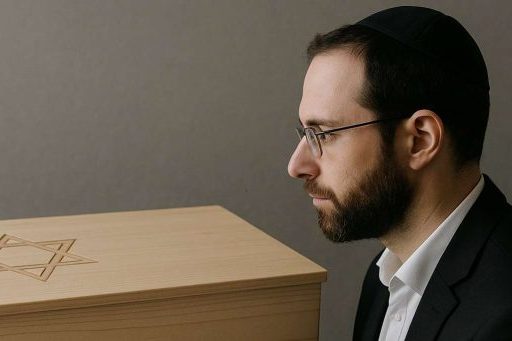
Q: Is arranging shmira for a meis a requirement or just a commendable thing to do?
A: It is actually a requirement. There is an obligation to ensure that someone is present with the meis (deceased) at all times from the moment of death until burial — including throughout Shabbos and Yomtov.1
There are three reasons for this obligation:
- Physical Protection – To prevent physical harm or desecration of the body, such as by rodents, mishandling or fire.2
- Respect and Comfort – To show kavod (respect) to the body by not abandoning it like an empty vessel that no longer has any use.3 This brings comfort to the neshama, which remains connected and concerned with how its body is treated.
- Spiritual Protection -To prevent mazikim (harmful spiritual forces) from entering the body when the neshama departs and leaves a void of kedushah.4
Regarding how it is done, it depends:
If there is a concern of rodents
The shomer must remain with the meis continuously. It is recommended to have two shomrim so that if one needs to step out, the other can cover.
If there is no concern of rodents (e.g., the meis is in a refrigeration unit) According to Rav Moshe Feinstein zt’l, the shomer need only be yotzei v’nichnas, which means:
A. Being present with the meis periodically – practically, a few minutes every hour is a recommended standard.
B. Maintaining an underlying awareness of his responsibility to return to the meis, even while stepping out.5
Other poskim disagree and require the constant presence of a shomer even when there is no concern of rodents.6
According to all opinions, if at all possible, the shomer should be awake for the duration of the shmira. Where that is not feasible, sleeping in the vicinity of the meis, or at least in the same building is still worthwhile, so that the meis is not completely alone, and the shomer will be alerted in case of emergency.
Being in the same room as the refrigeration unit, or at least in an adjacent area where the shomer can see the door of the unit, is considered “being present” with the meis.7
It is important to note that contemporary shmira is primarily about kavod hameis. Therefore, just as there are infinite levels of kavod, there are infinite levels of shmira. A minyan of people could be saying tehillim near the meis continuously (as is often done for great Torah scholars), and although not required, it is certainly a great kavod. In each situation a shomer should make every effort to provide the highest level of kavod possible – being present with the meis and saying Tehillim as frequently as he can. When a chevra kadisha provides shmira, the standards they set for their shomrim should reflect the highest level of kavod that is realistic for their community.


 Sorry, the password you’ve entered is incorrect. Need help